Biotech Can Now Insert Up to a Million DNA Letters. The Hard Part Is Getting It to Patients
2025 was not just another productive year for biotech. Multiple technologies reached new levels of practical impact. Here is what comes next.
· ~13 min read
The breakdown
A Year of Real Breakthroughs
For years, new biotech discoveries showed up in journals and press releases, but rarely made a real difference for patients right away. That changed in 2025. This time, some big advances moved straight into clinical use.
Take Baby KJ. He became the first infant to receive a CRISPR-based gene editing treatment designed just for him, a therapy built from scratch to correct his rare, life-threatening liver disorder. His liver couldn't clear ammonia, a fatal condition in infants. Doctors created a custom base-editing therapy, packed it in lipid nanoparticles, and treated him. The intervention worked: he's now healthy, growing, and walking. It wasn't just a possibility on paper. It happened.
It wasn't just a possibility on paper, it happened.
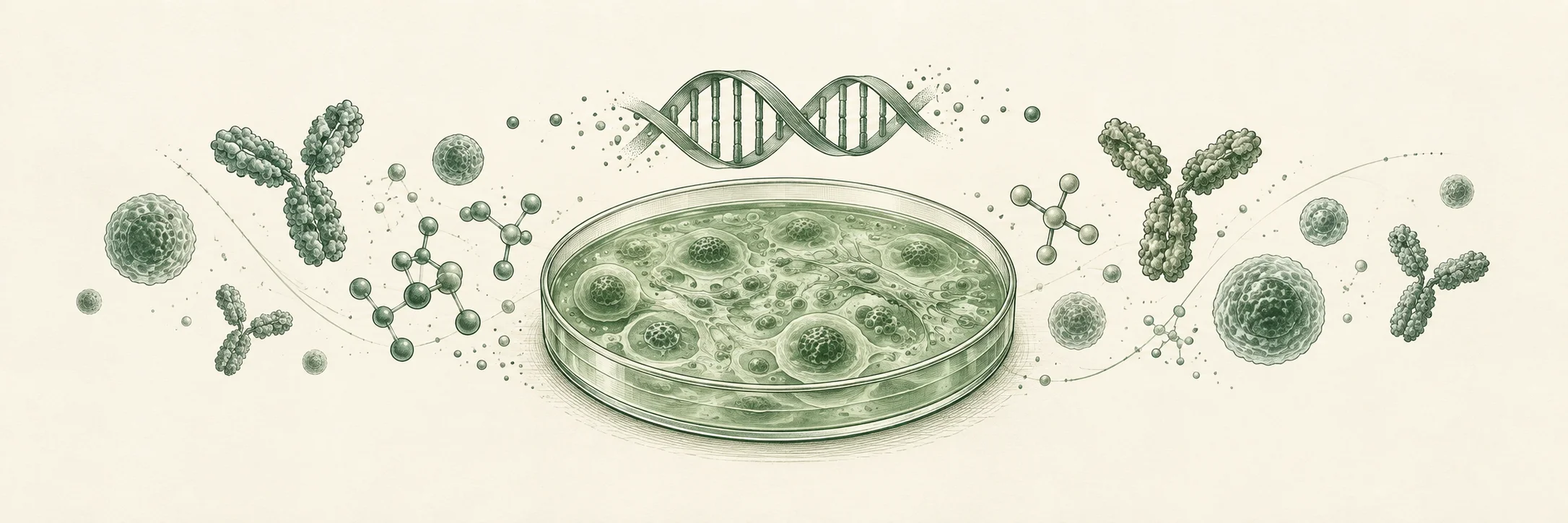
On the technology front, there's a new editing tool in the mix. Bridge recombinases, enzymes from bacteria, managed to insert huge pieces of DNA, up to a million base pairs, which is something CRISPR usually struggles with. This lets scientists deliver whole clusters of genes, enabling new kinds of gene and cell therapies. If these results hold up in human cells, the field could see complex genetic medicine projects start to look practical.
Genome sequencing passed a major milestone too. Roche sequenced and analyzed an entire human genome in less than four hours, a remarkable shift from the days or months it once required. With this kind of speed, hospitals can finally deploy whole-genome sequencing as a routine diagnostic tool, not just in research labs.
AI-designed biology moved forward as well. Tools like RFDiffusion and AlphaFold now help design brand-new proteins, including synthetic enzymes that can catalyze reactions nature can't do. Meanwhile, oral weight-loss drugs reached late-stage clinical trials: Eli Lilly's orforglipron, for instance, led to over 27 pounds of weight loss for patients, no more injections, just a daily pill.
Looking Ahead to 2026
Personalized medicine isn't just theory anymore. The success with Baby KJ proved that so-called N-of-1 therapies, custom treatments for a single patient, can function in real-world clinics. Now, regulators are working to create faster approval pathways for these ultra-personalized interventions. For many people with rare genetic conditions, 2026 may be the first time a tailor-made gene therapy truly exists as an option.
AI-powered drug discovery is moving quickly as well. AlphaFold 3 and similar models are already embedded in major pharmaceutical workflows, helping predict how experimental molecules bind to proteins, DNA, and RNA. The first real batch of AI-designed drugs is headed for clinical trials, and the big question is whether these new medicines will work, not just in silico, but in real patients.
Genome sequencing is sliding into everyday hospital life. With turnaround times now under four hours, clinicians can get a full genetic readout while it still matters; for newborns fighting mysterious illnesses, this may save lives. Cancer patients, too, will benefit: doctors can sequence tumors on demand, match mutations to targeted drugs, and make critical treatment choices rooted in real data. Genomics is becoming a central tool in the clinic.
CAR-T therapy, once just for certain blood cancers, now stands at the threshold of much broader use. Trials are underway for autoimmune diseases such as lupus and multiple sclerosis, and for rare diseases like stiff person syndrome. If the outcomes are positive and regulators agree, 2026 could bring the first CAR-T approval for a disease beyond cancer.
Metabolic disease is next. Oral weight-loss pills, including orforglipron and others, could reach patients in 2026, ending the era where every highly effective treatment had to be injected. This would redefine care for obesity, diabetes, and related illnesses for many people.
Spatial biology is also coming into its own. Tech from Illumina and peers now measures gene activity in single cells while preserving their precise position in tissue. That kind of spatial context matters deeply in cancer, where a cell's neighborhood can control its destiny. Multi-omics approaches, combining genomics, proteomics, metabolomics, and more, pull together different biological layers, uncovering mechanisms you'd miss with single data types.
Opinion: Looking Back, Looking Forward
In previous years, I often held back from calling any period a "breakthrough year," because so many hyped claims turned out to be less than advertised. But 2025 truly stands apart. Baby KJ's therapy worked. Bridge recombinases made big DNA edits. Roche sequenced a whole genome in four hours. These weren't projections or experiments. They happened. The science left the lab.
Now comes the hard part, and it's not just science. Financial and structural hurdles are blocking the path. Global health funding fell in 2025, knocking clinical trials and programs off balance. The biotech sector is still adapting. New gene therapies can cost hundreds of thousands per patient. Ensuring real access, not just technical feasibility, is emerging as the central challenge, yet it receives far less attention than the science itself.
Breakthroughs can't count as progress if they stay limited to a privileged few.
That access problem needs urgent focus. Breakthroughs can't count as progress if they stay limited to a privileged few. Ethical dilemmas are still tangled, too. Gene editing, AI-designed drugs, and extreme personalization push boundaries, creating gaps between what's possible and what societies are ready to accept. Debates about consent, fairness, long-term safety, and who decides are only beginning.
For these reasons, I expect 2026 to revolve less around dazzling lab feats and more around building the policy, regulation, and infrastructure that make these advances part of everyday medicine. Regulatory clarity for N-of-1 therapies, fair and sustainable payment models, and robust, flexible ethical guidelines: all of these need to be developed, and quickly.
If we get these structures right, the breakthroughs of 2025 can reshape medicine for everyone, not just a handful of patients. If we fail, those advances risk becoming boutique miracles, out of reach for most of the world. The next chapter depends not just on the next scientific discovery, but on how we organize and deliver what we already know.
Get the next breakdown
Subscribe for one email per issue — methods, limits, and what it actually means.
Related breakdowns
September 2025
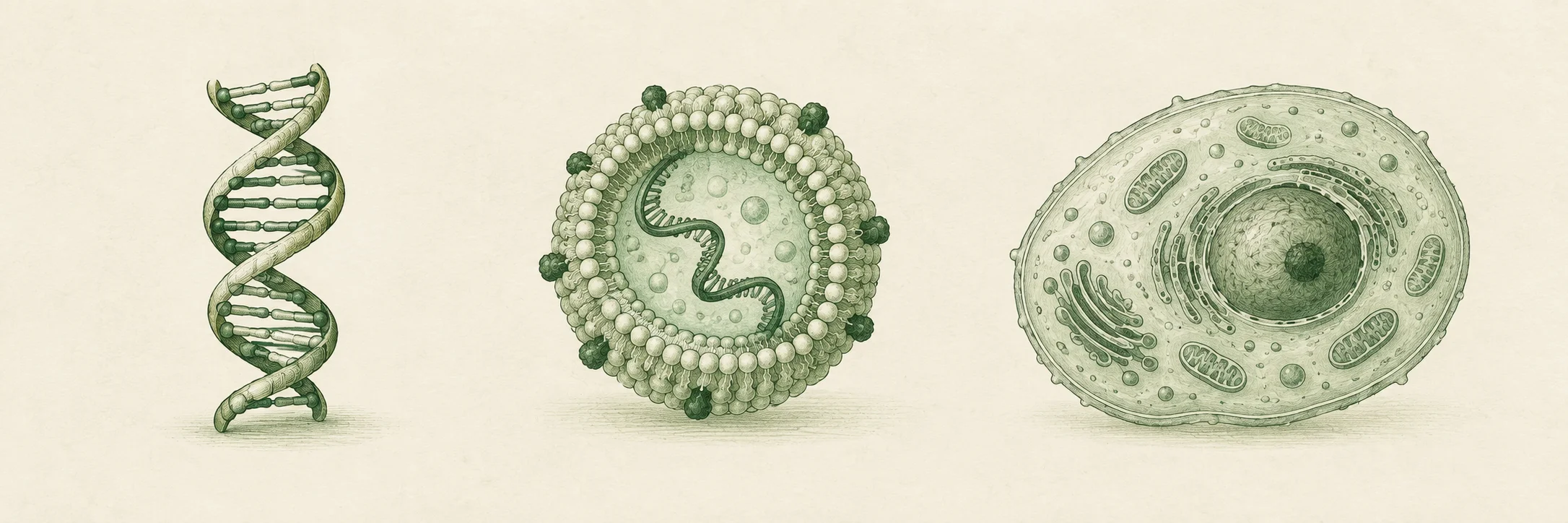
A New Delivery Method Tripled How Well CRISPR Gets Into Cells in the Lab
The hardest part of gene editing isn't the editing; it's getting the tools into the right cells. A new method triples efficiency.
Read breakdown →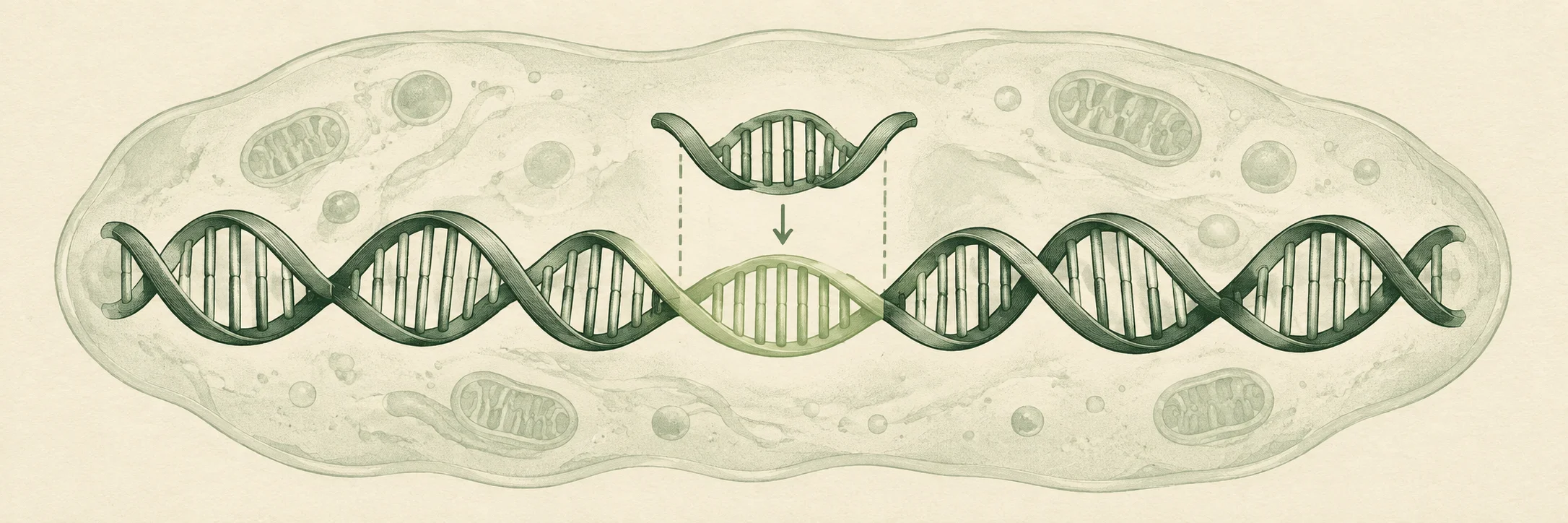
May 2025
The First FDA-Approved CRISPR Therapy Is Here. It Also Costs Over $2 Million
CRISPR therapies are now editing genes in real patients. The FDA approved the first one. What actually changes and what doesn't.
Read breakdown →